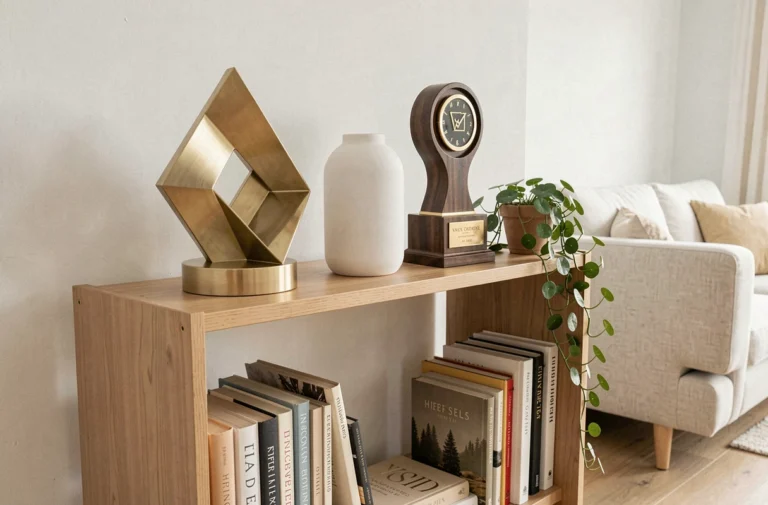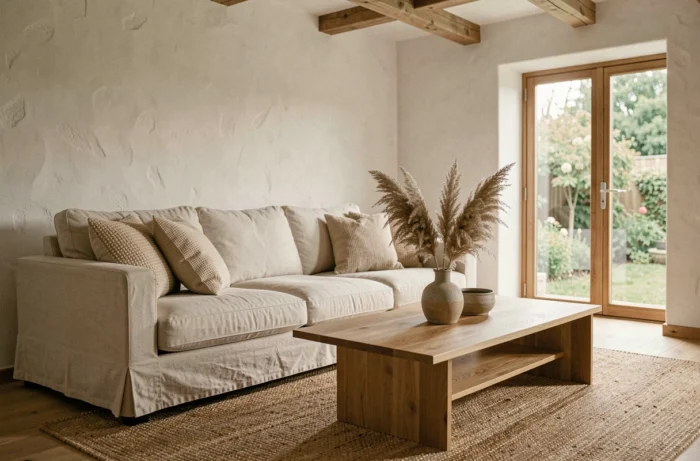
French interiors are undergoing a transformation that goes beyond mere seasonal aesthetic renewal. The rise of technical constraints related to energy renovation, the gradual reduction of living spaces in cities, and a marked return to raw materials are reshaping the way each room is conceived. These transformations are not a checklist of trends to tick off, but rather concrete trade-offs between budget, daily use, and the sustainability of choices.
Energy renovation and interior decoration: when technical constraints dictate style
Since 2024, financing schemes for energy renovation work (zero-interest loans, interest-free repayable advances) have pushed many households to insulate from the inside, change windows, or integrate efficient ventilation systems. These interventions physically alter the volumes: wall linings, casings, and false ceilings become permanent elements of the room.
Rather than hiding these additions, an increasingly common approach is to turn them into decorative supports. A technical duct casing becomes a backlit decorative niche. An acoustic false ceiling incorporates an indirect light strip that redefines the ambiance of the living room. The technical constraint becomes the starting point of the decor project, rather than an obstacle to be concealed.
This shift has a direct consequence on the market: interior designers now create their decorative scenarios starting from the technical renovation plans. To explore these intersections between layout and aesthetics, the home universe on Eklectik gathers resources that cover both practical aspects and visual inspirations.
Modular furniture: a sustainable response to the reduction of living spaces
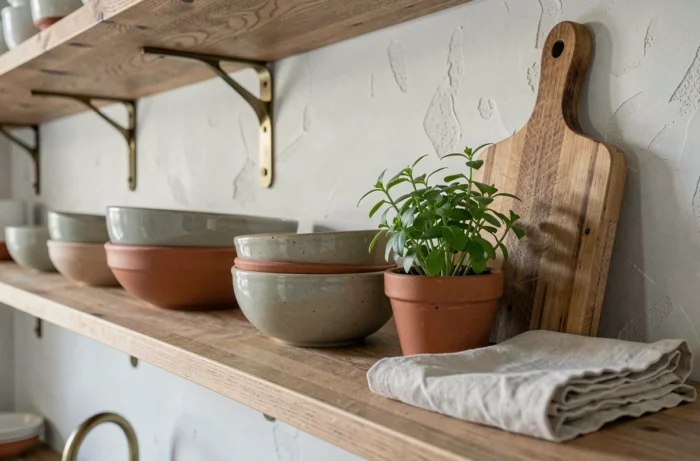
The continuous rise in real estate costs in urban areas compresses available spaces. Field reports converge on one point: modular and multifunctional furniture is no longer a gadget, but a structuring response to this reality. Extendable tables with integrated storage, storage ottomans, foldable desks, reconfigurable shelves – these pieces change the overall aesthetic of an interior by imposing clean lines and discreet mechanisms.
Multifunctional furniture redefines the layout of each room by eliminating the boundary between living room, office, and storage space. In a small bedroom, a bed with drawers and a headboard-bookcase replaces three distinct pieces of furniture.
What this choice implies in daily life
Choosing modular furniture requires rethinking circulation within the room. A convertible sofa requires sufficient clearance for deployment. A foldable table needs a load-bearing wall or a sturdy rail. These technical constraints are rarely mentioned in catalogs, but they condition the success of the layout.
Field reports vary on the durability of these mechanisms: some opening systems show signs of wear after a few years of intensive use. Checking the quality of hinges and rails before purchase remains the most reliable precaution.
Earthy colors and dark wood: what the raw materials trend changes concretely
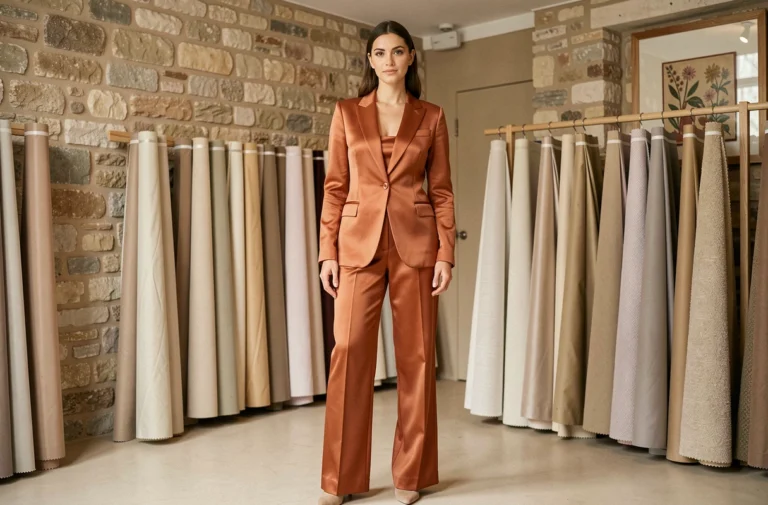
The color palettes of 2026 are anchored in earthy tones, deep browns, and matte finishes. Dark wood is making a strong comeback on kitchen facades, headboards, and wall coverings. This aesthetic direction is not just a color preference: it reflects a choice of materials that has practical implications.
- Matte finishes better conceal signs of use than glossy finishes, but they are more sensitive to greasy stains in the kitchen and require appropriate maintenance (no abrasive products).
- Dark wood absorbs more natural light: in a north-facing room or one with small openings, it can significantly darken the space without well-thought-out supplementary lighting.
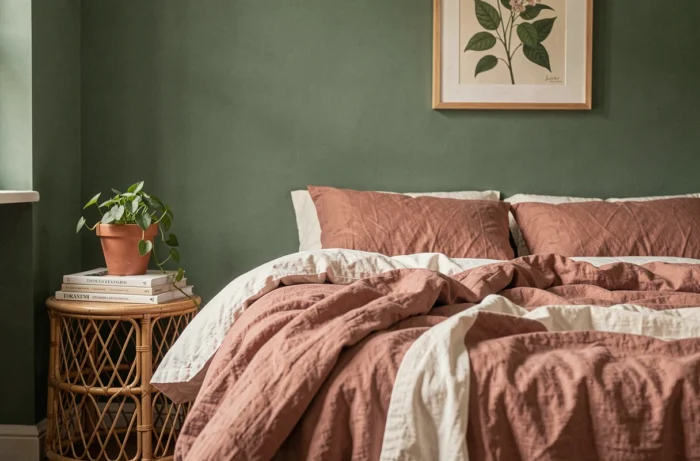
- Earthy shades (ochre, terracotta, rosy brown) work well with light textiles or natural linen, but do not tolerate accumulations of patterns well – the risk of visual saturation is real.
Combining dark wood and indirect light allows for retaining the warmth of the material without overwhelming the volume of the room. A LED strip behind a walnut shelf creates a depth that the ceiling light alone does not produce.
Kitchen and bathroom space: design choices that withstand use
The kitchen and bathroom concentrate the most costly decor decisions to correct. Poorly chosen tiles or an unsuitable countertop are experienced for years. Current trends favor large-format ceramic tiles and textured surfaces that mimic natural stone, with a practical advantage: their resistance to thermal shocks and humidity exceeds that of many natural materials.
What works in an open kitchen
The open kitchen to the living room imposes a coherence of materials between the two spaces. A continuous floor in ceramic stoneware eliminates visual breaks and enlarges the perception of volume. On the other hand, wide joints between large-format tiles accumulate dirt in the cooking area – a fine epoxy joint limits this problem.
For the bathroom, the available data does not allow for a conclusion on the absolute superiority of one material over another in terms of longevity. Feedback varies according to exposure to water, ventilation of the room, and frequency of maintenance. The safest choice remains to prioritize materials certified for use in humid environments rather than relying solely on visual appearance.
Maximalist style versus minimalism: a false decor debate
Maximalist style is gaining visibility in decor media, often opposed to minimalism as if one must choose a side. In practice, most successful interiors combine both approaches depending on the rooms. A living room can accommodate a controlled accumulation of textiles and art objects, while the bedroom remains stripped down to promote rest.
The aesthetic of an interior is built room by room, not by applying a single style to the entire home. The garden or terrace, when they exist, follow the same logic: an outdoor space filled with plants and colorful furniture can perfectly adjoin a sober interior.
Lasting interior decoration choices are those that stem from the actual use of each space, not from an image found online. A material suited to the room, a piece of furniture sized for circulation, lighting designed for the volume: these technical trade-offs, often less photogenic than a mood board, are what make the difference in daily life.