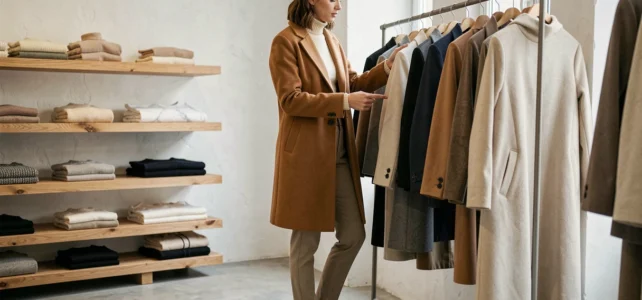
Each new school year redistributes the dress codes. The autumn-winter 2026 season is no exception: the fashion shows have set clear directions, but the real issue lies in how these proposals land in everyday wardrobes. Deep colors, textured materials, architectural silhouettes – the fashion trends of the season create a more thoughtful wardrobe, driven by a changing consumption context.
Leather and faux fur: two materials redefining the autumn-winter silhouette
Have you noticed that leather is no longer limited to the biker jacket? This season, it extends to midi skirts, wide trousers, and structured dresses. The Parisian fashion shows showcased leather pieces with boxy cuts, looser than the fitted versions of previous years.
Faux fur, on the other hand, returns in a shorter and more graphic form. It appears as a removable collar, a cropped jacket, or a muff. The idea is not to reproduce an XXL coat, but to add a contrasting texture to a sober outfit.
What changes compared to past seasons is the combination of the two. Matte leather and short faux fur are worn together, in a layering game that adds volume without weighing down. The designers who presented their collections in Paris extensively explored this avenue, playing with neutral tones (brown, black, cream) rather than saturated colors.
To explore these combinations and find pieces that align with this direction, the fashion section of Bertrand Barré allows you to spot current silhouettes without getting lost in an overly broad catalog.
Colors of the 2026 school year: deep velvet imposes its palette
The palettes of the season are organized around dense shades. Bordeaux, fir green, and midnight blue dominate, but it is especially the velvet that gives them their identity. Deep velvet is the chromatic thread of this autumn.
Why velvet rather than another fabric? Because it absorbs light and gives these dark colors a depth that cotton or polyester do not replicate. A bordeaux corduroy pant does not send the same signal as a bordeaux cotton twill chino.
Three color combinations that work this season
- Bordeaux velvet and broken cream: the classic contrast, enhanced by the texture of velvet that adds warmth without forcing originality
- Fir green and chocolate brown: an earthy combination that works well both in the city and outdoors, provided the materials are varied (wool, leather, knit)
- Midnight blue and anthracite gray: the most discreet duo, ideal for an office wardrobe that wants to follow the trend without standing out
A common mistake is to multiply velvet pieces in the same outfit. One velvet piece is enough to anchor the look in the season. The rest benefits from remaining matte or slightly textured.
Return of formal wear: shirts and suits regain ground
The data confirms it: in France, shirt sales increased by 8% in 2025 compared to 2024, according to Refashion figures relayed by HommeUrbain.com. At the same time, sportswear is declining.
This movement is not just for men. The formal wardrobe is returning to women’s closets with oversized blazers, pleated suit trousers, and tucked-in poplin shirts. The tailoring trend observed on the runways for the past two seasons is beginning to translate into actual purchases.
What distinguishes formal 2026 from the classic suit
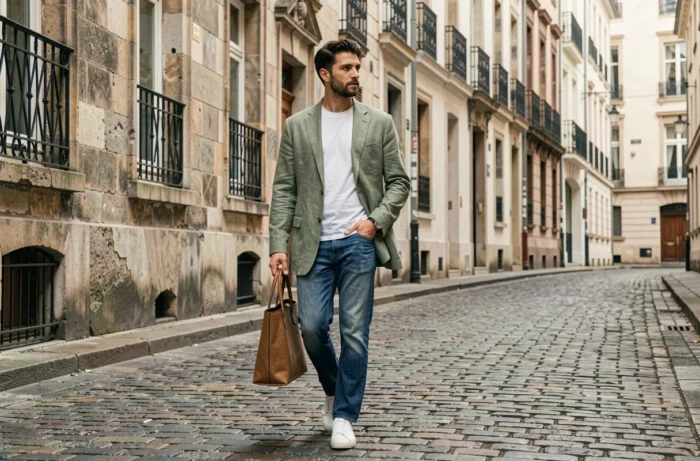
This season’s suit is not the office attire of the 2010s. The shoulders are more pronounced, the jackets are longer, and the fabrics are less rigid. We see the emergence of suits in crinkled wool or soft flannel, worn with sneakers or thick-soled loafers.
The shirt, meanwhile, is often worn open over a t-shirt or a fine turtleneck. This detail changes everything: it transforms a formal piece into a layering element, making it wearable in everyday life without giving the impression of coming from a job interview.
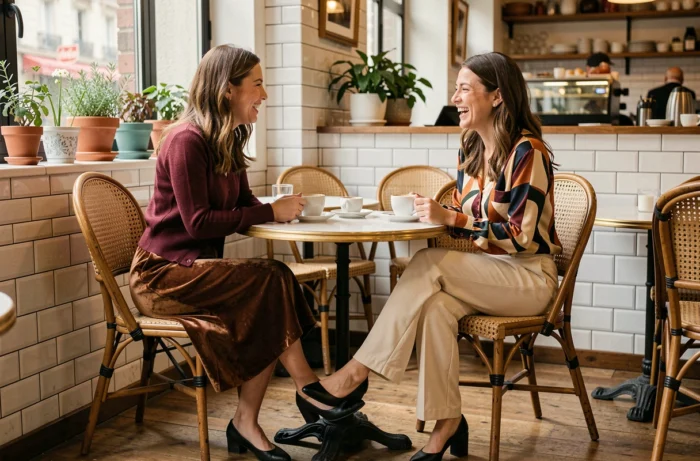
Fashion consumption in France: buying less but better is no longer a slogan
Stylistic trends tell only part of the story. The economic context directly impacts how the French dress. According to a Worldpanel by Numerator study published in July 2026, fashion purchase volumes have decreased by about 5% compared to 2019, and the majority of households report wanting to reduce their clothing expenses.
This decline does not indicate a disinterest in fashion. It reflects a trade-off: consumers prioritize more durable pieces, sturdier materials, and cuts they will keep for several seasons. Velvet, leather, thick wool – the key materials of this autumn-winter – precisely respond to this logic.
What this decline changes for everyday style
- Versatile pieces take precedence: a wool blazer that transitions from office to weekend is better than two specialized jackets
- Quality basics (shirt, straight trousers, knit sweater) become the foundation around which one or two strong pieces are articulated each season
- Second-hand and rental options are gaining ground, especially for trendy pieces with a short lifespan (highly marked prints, saturated colors)
Building a wardrobe around three or four solid pieces has become the dominant strategy. The season’s trends, with their sober palette and durable materials, lend themselves particularly well to this.
The autumn-winter 2026 fashion rewards those who choose little but choose well. A good velvet, a perfectly fitting shirt, a soft leather piece worn for several years – this is the direction in which the season’s style finds its concrete meaning.