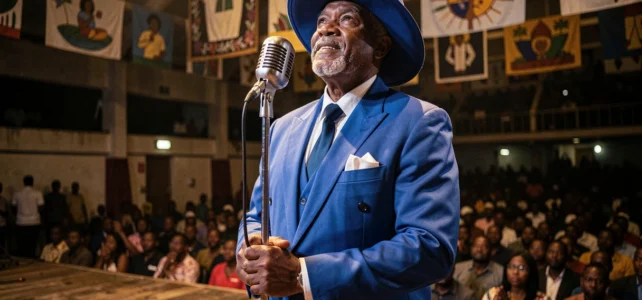
Jules Shungu Wembadio Pene Kikumba, born on June 14, 1949, in Lubefu in the Sankuru province, grew up in Kinshasa where he forged a career that redefined Congolese rumba. Known as Papa Wemba, he took this music far beyond the borders of Congo, to European stages and Parisian studios.
His brutal death on stage in Abidjan on April 24, 2016, left a void that the African music scene is still measuring ten years later.
Congolese Rumba and Papa Wemba’s Vocal Legacy
Papa Wemba’s voice remains one of the most recognizable timbres in African music. High-pitched, agile, capable of shifting from a lyrical register to near-shouting inflections, it established a style that generations of Congolese singers have tried to replicate without ever matching it.
His musical journey crossed several decisive formations. After starting in youth groups in Kinshasa, he co-founded Zaïko Langa Langa in the early 1970s, an orchestra that broke the codes of classical rumba by speeding up tempos and incorporating more aggressive guitars. A few years later, he created Viva La Musica, his own orchestra, which became a true school for dozens of Congolese artists.
Fally Ipupa, interviewed recently, cited Papa Wemba among the six legends of Congolese music that make up his “dream orchestra,” alongside Koffi Olomidé, Madilu System, Reddy Amisi, King Kester Emeneya, and Bozi Boziana. This mention illustrates the place Papa Wemba occupies in the Congolese musical hierarchy: that of a founder whose influence still shapes the artistic choices of current stars.
The website papawemba.fr gathers part of this discographic and biographical legacy for enthusiasts looking to trace his journey.
Sape as a Cultural Movement Linked to Papa Wemba
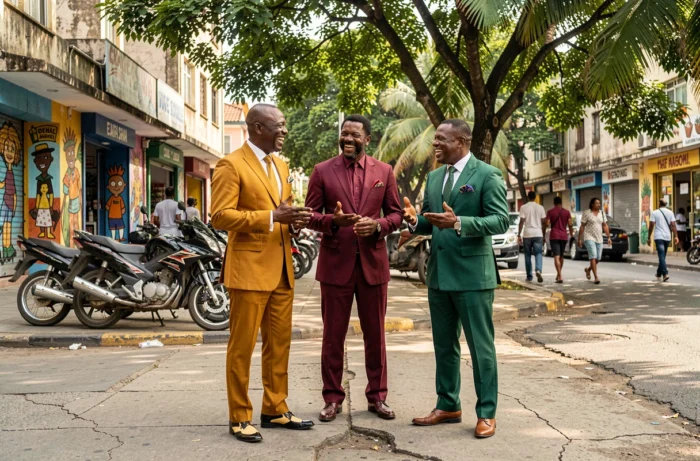
Papa Wemba did not invent the Society of Ambianceurs and Elegant People, but he became its most publicized face worldwide. The Sape, born between Kinshasa and Brazzaville, blends a cult of branded clothing, self-staging, and a philosophy of life. Papa Wemba transformed this dress code into a complete artistic identity.
His stage appearances in European haute couture costumes, often signed by Parisian houses, created a direct link between Congolese rumba and the fashion world. This link endures: in August 2026, the DRC Fashion Week in Kinshasa dedicated an edition to Sape as a Cultural Heritage of the Two Congos, proving that the movement remains alive and claimed.
Papa Wemba’s relationship with Sape also had a darker side. His role in clandestine immigration routes to France, where he smuggled young Congolese as members of his group, led to a conviction by French justice. This episode, far from erasing his legend, added a layer of complexity to a figure who resisted simple labels.
Papa Wemba and France: A Two-Way Artistic Relationship
Papa Wemba’s international career was largely built from Paris. It was there that he recorded several of his most ambitious albums, blending rumba with pop, rock, and electronic sounds. Collaborations with Western producers opened the doors to world music in the 1980s and 1990s, at a time when this genre was beginning to structure itself as a record market.
Paris has remained the hub for the dissemination of Congolese rumba to the rest of the world. Concerts at the Zénith, appearances in French media, and the Congolese diaspora established in Île-de-France formed an ecosystem that carried Papa Wemba’s music far beyond the African audience.
This relationship with France also highlighted imbalances. A recent audit by the General Inspectorate of Finances estimated the SOCODA’s deficit at 25 million dollars, with only 35,882 dollars in confirmed payments to rights holders.
The catalogs of rumba legends, including that of Papa Wemba, continue to be exploited without their families receiving proportional compensation. The real money from rumba flows through structures based outside Congo, and the issue of copyright remains a blind spot in the collective tribute.
Ten Years Later: Heritage and Musical Reappropriations
In July 2026, the National Museum of Rumba in Kinshasa scheduled three days of tribute to Papa Wemba to mark the decade since his passing. This institutional event marks a turning point: Papa Wemba is now integrated into a state cultural policy around rumba, inscribed in the intangible cultural heritage of humanity by UNESCO.
This official heritage designation coexists with more unexpected reappropriations. South African producer Nitefreak recently reworked a Papa Wemba track by adding an afro house production, signaling that his repertoire is becoming material for genres distant from traditional rumba. This type of remix raises questions about the boundary between tribute and commercial exploitation, especially since the issue of rights remains unresolved.
Papa Wemba’s journey condenses several tensions that run through African music:
- The difficulty for Congolese artists to control the dissemination and monetization of their catalog from Kinshasa, facing structures concentrated in Paris or elsewhere in Europe
- The gap between symbolic recognition (statues, museums, official tributes) and the economic reality for rights holders
- The transformation of a living, complex, and sometimes controversial artist into a smooth icon over the course of heritage designation
A statue of Papa Wemba already stands at the Bana Kin roundabout, at the entrance to the Tata Raphaël stadium in the Matonge neighborhood of Kinshasa. The bronze fixes an image. The music, however, continues to circulate, to be remixed, sampled, claimed. The legend of Papa Wemba relies less on commemoration than on the ability of his melodies to reappear where no one expected them.