
A thermal mower that empties its tank too quickly almost always indicates a mechanical problem or a maintenance issue. The engine runs longer at high speed, the air-fuel mixture becomes unbalanced, and the fuel bill rises without the lawn being cut any better. Here are five concrete causes of excessive fuel consumption in a mower, along with the actions to remedy them.
1. Degraded fuel due to prolonged storage in the tank

Have you ever noticed that your mower smokes or stalls after several weeks without running? The fuel is probably to blame. Modern unleaded gasoline, especially E10, degrades in just a few weeks. The lighter compounds evaporate, the mixture becomes irregular, and the engine compensates by consuming more.
This phenomenon is amplified by the presence of ethanol in the fuel. Ethanol absorbs ambient moisture, leading to phase separation in the tank. The engine then receives either a mixture that is too rich or a mixture diluted by water. The result: difficult starts, black smoke, and abnormal consumption.
The solution involves two actions. Do not store gasoline for more than three to four weeks in the tank. If the mower needs to remain stationary, add a fuel stabilizer as soon as you fill it up. Before winter storage, completely drain the tank or run the engine until the fuel is exhausted. As explained by specialized engine technicians on the tondeuse-thermique.info website, this degradation remains the primary cause of excessive consumption in thermal mowers.
2. Clogged air filter choking the engine
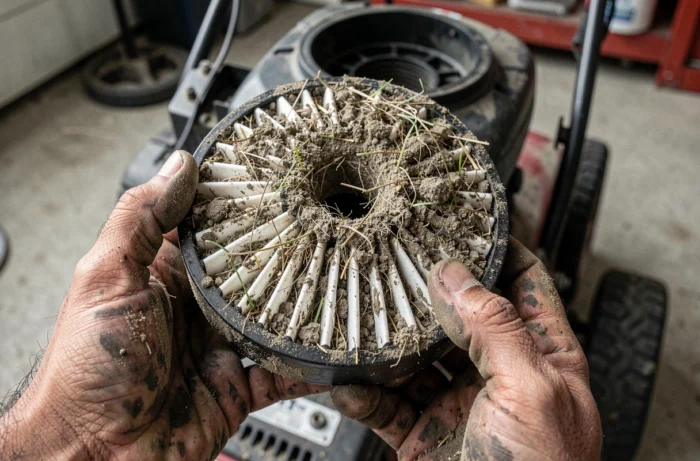
The air filter regulates the amount of oxygen entering the carburetor. When it is blocked by dust, dried grass blades, or pollen, the engine no longer receives enough air. The mixture becomes too rich in gasoline, and each combustion cycle wastes unburned fuel.
A dirty filter is easy to spot. If the mower loses power, emits black smoke, or consumes more than at the beginning of the season, remove the filter and examine it. On most models, this operation takes less than two minutes without tools.
- A foam filter can be washed in warm soapy water and then allowed to dry completely before reassembly
- A pleated paper filter should be tapped to remove dust but must be replaced as soon as it is gray or torn
- During intensive mowing periods (spring), check the filter every three to four mowings
A clean filter restores a correct air-fuel ratio and significantly reduces consumption without touching the carburetor.
3. Grass buildup under the deck that slows the blade
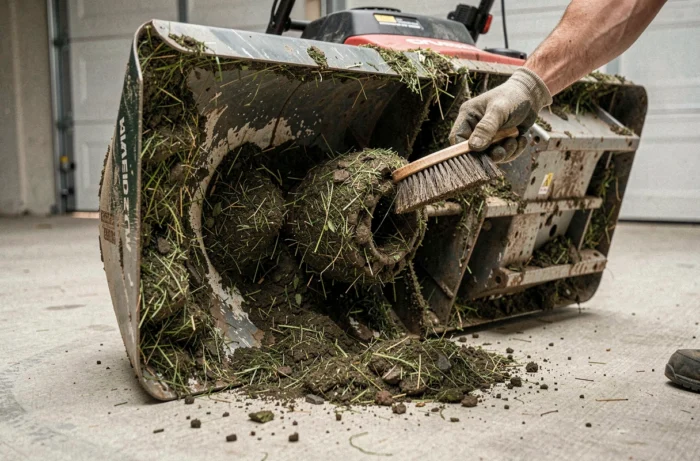
After each mowing, residues of wet grass stick under the deck. If you do not clean it regularly, this material dries and forms a compact crust. The blade then operates in a reduced space, which increases mechanical resistance and forces the engine to rev up to maintain the cut.
An engine that works harder consumes more gasoline. The loss of efficiency is gradual: week after week, the layer thickens, and the engine compensates without you noticing it in the noise. Excessive consumption can become significant over an entire season.
The remedy is simple. After each mowing, tilt the mower (spark plug up to avoid oil leakage) and scrape the underside of the deck with a wooden or plastic spatula. Some users spray a light film of vegetable oil on the clean deck to limit the adherence of fresh grass during the next mowing.
4. Dull blade forcing the engine to work harder
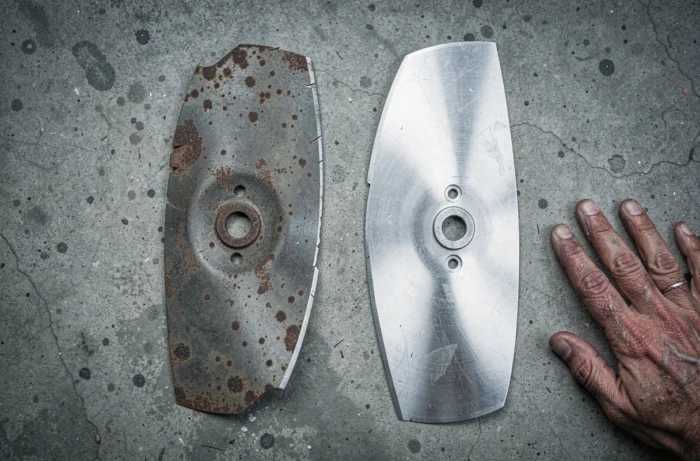
A well-sharpened blade cuts the grass blade cleanly. A dull blade tears it. This difference has a direct cost in fuel because the engine must provide much more torque to tear the grass instead of cutting it.
You can check the condition of your blade by observing the lawn after mowing. If the tips of the blades are shredded, white, or frayed, the blade is no longer cutting; it is tearing. Your lawn takes longer to heal, and your engine consumes more gasoline with each pass.
- Sharpen the blade at least once per season, ideally twice if you mow every week
- Use a flat file or an angle grinder with a fine disc, respecting the original angle of the edge
- Check the balance after sharpening: an unbalanced blade causes vibrations that wear the crankshaft and further increase consumption
A sharp blade reduces mowing time and consumption for the same pass. It is one of the most cost-effective maintenance actions for a thermal mower.
5. Misadjusted or clogged carburetor due to resin deposits
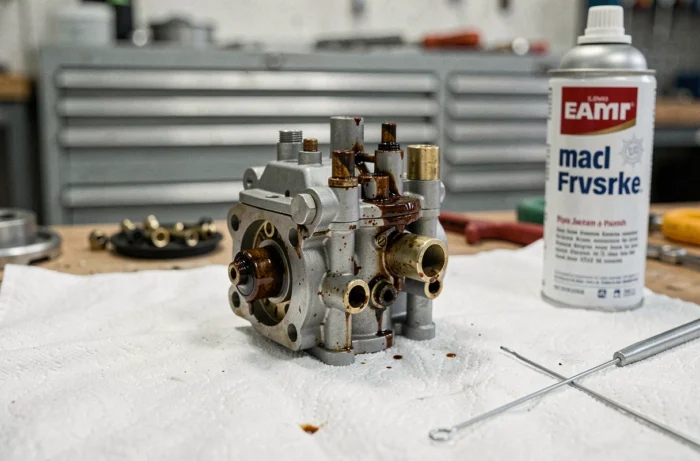
The carburetor doses the air-fuel mixture sent to the engine. When its jets are partially clogged by resin deposits (from aged gasoline), the dosing becomes erratic. The engine receives too much fuel relative to the available air, which is called a too rich mixture.
The symptoms are recognizable: black smoke from the exhaust, strong odor of unburned gasoline, blackened and wet spark plug. On some mowers, adjustment screws allow you to adjust the richness of the mixture. Turning the mixture screw a quarter turn towards the lean direction may be enough to correct a slight drift.
If the problem persists, a complete cleaning of the carburetor is necessary. Disassembly is accessible on most consumer mowers. Soak the carburetor body and jets in a specific cleaner, then blow out each orifice with compressed air. A clean carburetor restores correct dosing and stops excessive consumption.
For plastic carburetors, found on recent entry-level models, caution is advised. Aggressive solvents can warp the parts. Use only a cleaner compatible with polymer materials, as indicated on the product label.
Excessive consumption in a thermal mower rarely results from a single isolated cause. Old fuel, clogged air filter, dirty deck, dull blade, and misadjusted carburetor often accumulate over a season without maintenance. Cleaning the deck after each mowing, checking the filter and blade every few weeks, and using fresh fuel with stabilizer are sufficient to maintain normal consumption throughout the engine’s lifespan.