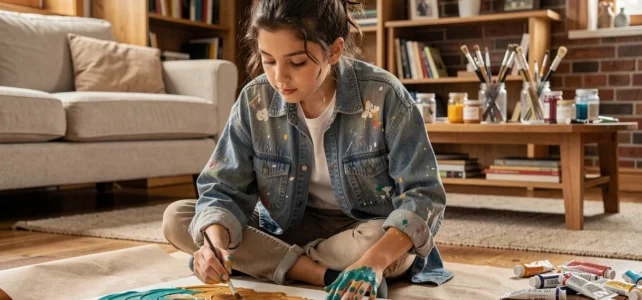
A 14-year-old who is just hanging around at home doesn’t lack free time; they lack projects that are appropriately challenging. Creative activities that work at this age share a common point: they produce a tangible result in less than two hours, with a technical level sufficient to avoid feeling infantilizing.
Textile Projects and Slow Craft for Teens: The Return of Handmade
Crochet, embroidery, and punch needle are no longer just grandma’s hobbies. Recent data shows that Generation Z is massively embracing analog crafts, integrated into routines of intentional disconnection. In Sweden, a study by the Myndigheten för kulturanalys (2025) indicates that 35% of 16-29 year-olds engage in manual work at least once a month.
For a 14-year-old, amigurumi crochet (small 3D figures) offers an accessible technical entry point. The materials are limited to a hook, a ball of cotton, and a video tutorial. We recommend aiming for a first project that can be completed in a single session, like a small mushroom or a keychain, to anchor the feeling of competence.
Punch needle on embroidery canvas works on the same principle: repetitive motion, quick visual result, and the possibility to reproduce a personal pattern. These manual activities at home fit into the trend of “mindful making,” where the process is as important as the finished object.
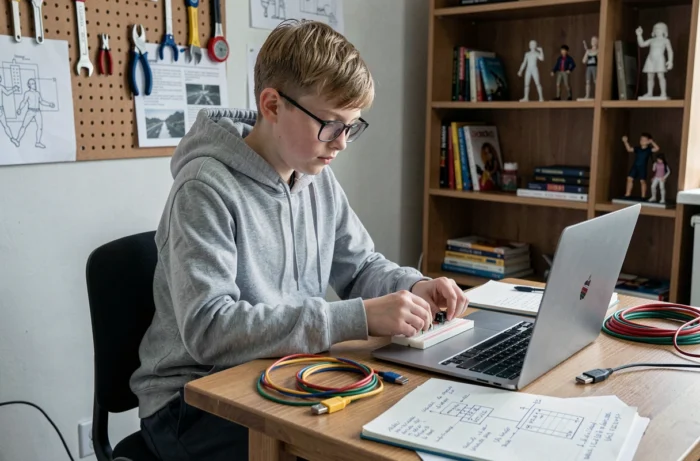
Video Editing and Content Creation Without Publishing
Filming and editing a video doesn’t mean feeding a social network. Among the ideas for teens on Clarity News, video creation ranks high, and for good reason: it involves scripting, framing, sound pacing, and post-production.
A 60-second short film is a complete exercise. The teen writes a pitch, films with their phone, and then edits using free software like DaVinci Resolve or CapCut desktop. The short format imposes tight narrative choices, which develops a real sense of editing.
A highly creative variant is stop-motion. Using figurines, modeling clay, or even everyday objects, each second of film requires about a dozen photos. The result, even if imperfect, consistently impresses.
Technical Cooking: Going Beyond Simple Recipes
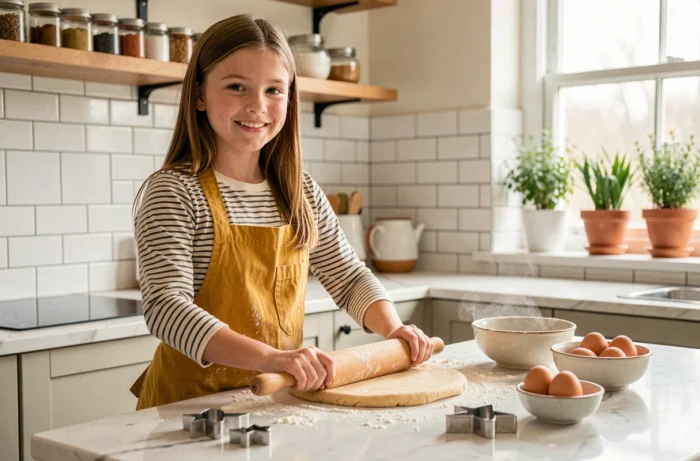
Cooking with a 14-year-old becomes more interesting when moving away from “chocolate cake” to tackle precise techniques. Tempering chocolate, making inverted puff pastry, mastering the fermentation of pizza dough over 24 hours: these actions require rigor and patience.
Long fermentation transforms a mundane activity into a nearly scientific experience. Preparing a sourdough starter, observing its rise, adjusting hydration and temperature, then baking the bread the next day occupies a teen over two days with short active phases.
Another underutilized avenue is food photography. Plating a dish, working with natural light, framing from above or at a three-quarter angle, lightly retouching the image. Cooking then becomes an excuse to work on composition and photo editing.
The Minimal Equipment to Get Started
- A clear workspace near a window for natural light, a phone with manual mode or a free app like Lightroom Mobile
- Basic ingredients for three attempts (flour, butter, couverture chocolate), as technique improves through repetition
- A physical notebook to note ratios and resting times, instead of relying on screenshots that are never found
Tabletop Role-Playing Games and Collaborative Writing
Tabletop role-playing games remain one of the most underestimated fun activities for a teen at home. No need for a group of five players or a 400-page rulebook. Lightweight systems like Lasers & Feelings (one page of rules) or Mausritter allow for a family game to be started in under twenty minutes.
The real benefit lies in narrative improvisation and decision-making. The teen embodying a character must argue, negotiate, and anticipate the consequences of their choices. It’s an exercise in oral expression and pure creativity, without screens.
For teens who prefer writing, creative journaling or writing a short story with constraints (imposed genre, limited word count, mandatory twist ending) offers a structured alternative. The constrained format frees the imagination by eliminating the paralysis of the blank page.
Object Customization and Textile Upcycling
Transforming an old pair of jeans into a bag, painting a reclaimed piece of furniture with chalk paint, screen printing a t-shirt with a stencil cut from precision knives: these DIY projects produce usable objects, which radically changes the motivation compared to a purely decorative exercise.
Homemade screen printing deserves special mention. With an embroidery frame, a piece of fine tulle, and textile ink, you can create a functional setup for under ten euros. The teen designs their pattern, cuts the stencil, and applies the ink with a squeegee.
- Suitable materials: plain cotton t-shirts, tote bags, pillowcases
- Recommended inks: water-based textile inks, heat-fixable, machine washable
- Progressive difficulty: start with a monochrome geometric pattern before attempting color overlays
A successful upcycling project enhances creative autonomy well beyond the activity itself. A teen who has made their own bag no longer views everyday objects in the same way.
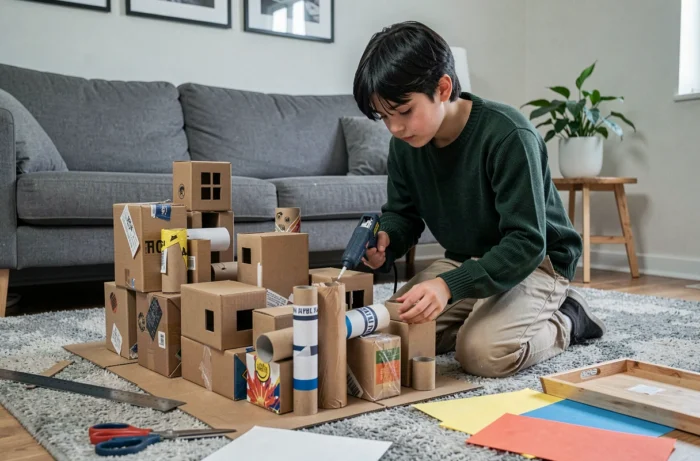
The common thread of these creative and fun activities is based on one principle: provide a clear technical framework, an achievable goal within the day, and let the teen take ownership of the result. Research on the link between creative practice and mental well-being in adolescents confirms that the process of making reduces stress and enhances the feeling of competence.
The right project is not the one that occupies the longest time, but the one that the teen wants to do again.