A lower back pain that returns every Monday morning after the weekend, shoulders locked from sitting in front of a screen, sleep that no longer restores anything: it is often from these concrete signals that one ends up unrolling a yoga mat. The practice does not solve everything, but it addresses several of these points simultaneously, provided you know what to expect from it and how to engage without getting injured.
Yoga and lower back pain: what the summaries really show
It is often said that yoga relieves back pain. The available scientific summaries confirm small improvements in pain and function compared to the absence of exercise. However, yoga is not clearly superior to other exercises targeting the back. Classic lumbar strengthening programs achieve comparable results.
This point changes the way we approach the practice. If you suffer from chronic low back pain, yoga can replace an exercise program, not be added as a miracle bonus. The choice between the two depends on what keeps you consistent: some people stick better to a routine of postures than to a series of squats and planks.
Another less reported fact: yoga can worsen certain back pains. The reported side effects are generally mild (muscle soreness, temporary stiffness), but the increase in back pain appears more frequently than in the absence of exercise in certain summaries. Progressing slowly in the postures and stopping immediately in case of acute or persistent pain remains the basic rule.
Working on well-being with Les Jardins Du Yoga involves this progressive approach, where each session respects the body’s limits rather than forcing them.
Stress and yoga: promising but not definitive results
Stress reduction is the most cited reason to start yoga. A meta-analysis published in 2024, focusing on stressed adults, indeed observes a decrease in perceived stress in the short term compared to no intervention. However, the level of certainty of the evidence is described as low.
In practical terms, one can expect a calming effect after a session, but the long-term effects are not yet solidly demonstrated. Yoga acts on the autonomic nervous system through controlled breathing (pranayama) and relaxation. This mechanism is well documented. What is less documented is the duration of this effect once you leave the mat.
Breathing and meditation: the real stress-relief lever
In most classes, the last minutes are dedicated to yoga nidra or guided relaxation. This extended meditation time causes a measurable slowing of the heart rate and a decrease in muscle tension. For those who cannot tolerate traditional seated meditation, this form of body relaxation often works better.
If your main goal is stress management, prioritize classes that include at least ten minutes of pranayama and relaxation rather than dynamic sequences like fast vinyasa. Feedback varies on this point, but slow formats (yin yoga, gentle hatha) seem better suited to this goal.
Postures and flexibility: adapting the practice to your body
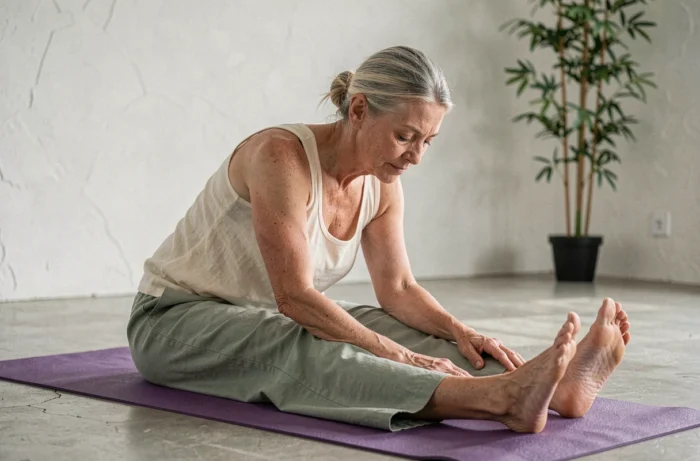
Flexibility is not a prerequisite for yoga; it is a gradual side effect. Generally, one sees an improvement in joint mobility after a few weeks of regular practice, particularly in the hips, shoulders, and spine.
Three concrete guidelines for working on flexibility safely:
- Hold each posture for five to eight complete breaths, without forcing the range of motion. The stretch should remain comfortable, never painful.
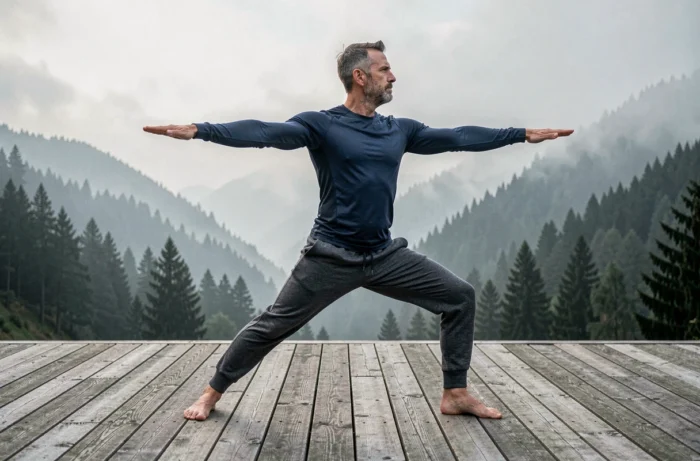
- Alternate dynamic sessions (sun salutation, warrior) with prolonged stretching sessions (yin yoga) to engage both superficial muscles and deep tissues.
- Use props (blocks, straps, bolsters) to adapt the posture to your morphology rather than compensating with poor back or knee positioning.
A well-placed prop protects better than a forced posture. Injuries in yoga almost always occur when one tries to reproduce the final shape of a posture without respecting their own anatomical limits.
Sleep and recovery: what yoga concretely changes
Improvement in sleep is one of the most frequently reported benefits by regular practitioners. The mechanism is indirect: the decrease in muscle tone and the regulation of the nervous system facilitate falling asleep.
Practicing in the evening, between thirty and sixty minutes before bedtime, with floor postures and a yoga nidra session, creates a physiological ritual for transitioning to sleep. This format works better than intense physical sequences, which can, on the contrary, stimulate the nervous system and delay falling asleep.
Which styles of yoga to prioritize in the evening
- Yoga nidra (yogic sleep): lying down, guided by the teacher’s voice, without physical effort. Suitable for people suffering from mild insomnia.
- Yin yoga: postures held for several minutes, targeting connective tissues. Ideal for releasing accumulated tension throughout the day.
- Gentle hatha: slow sequences focusing on breathing. A good compromise between movement and relaxation.
Legal framework and safety: check the teacher’s training
The French legal framework for teaching yoga does not always protect practitioners as one might think. No state diploma is required to teach yoga in France. Trainings vary from a few weekends to several years. This disparity explains the quality gaps between available classes.
To limit risks, check that the teacher has at least professional liability insurance covering sports activities. Also, ask about the number of training hours completed: internationally recognized certifications require at least two hundred hours of initial training.
The transformation of daily well-being through yoga relies on regular practice, adapted to one’s body, and guided by a competent teacher. Starting with two weekly sessions, observing the effects over a few weeks, and then adjusting the style and frequency remains the most reliable method to derive lasting benefits.